
Understand the essential cosmetics labelling requirements in the UK and why choosing the right coding and marking solution matters. Learn how Hitachi CIJ printers help personal care manufacturers stay compliant, prevent counterfeiting, and maintain brand aesthetics at speed.
Think about the last personal care product you picked up. Maybe it was a frosted glass serum, a squeezable tube of moisturiser, or a sleek metallic fragrance bottle. In each case, somewhere on that packaging, there is a batch code, an expiry or best-before date, and a set of mandatory information that places a legal obligation on the manufacturer who made it.
For consumers, these details are easy to overlook. For manufacturers, they represent one of the most technically demanding challenges on the production floor. Getting a clear, durable, legally compliant code onto cosmetic packaging sounds straightforward. In practice, it requires a coding and marking solution that can handle curved surfaces, solvent-laden environments, premium aesthetics, high line speeds, and the constant threat of counterfeiting, often all at once.
This article examines the UK’s cosmetics labelling requirements in detail, explains why industrial printing in personal care is far more demanding than it first appears, and sets out the core capabilities that any coding solution used in this sector absolutely must deliver.
Since the UK’s departure from the European Union, cosmetic product regulation in Great Britain is governed primarily by the UK Cosmetics Regulation (retained EU law), enforced by the Office for Product Safety and Standards (OPSS). While much of the framework mirrors the former EU Cosmetics Regulation (EC) No 1223/2009, manufacturers and importers must now ensure compliance specifically with GB market requirements.
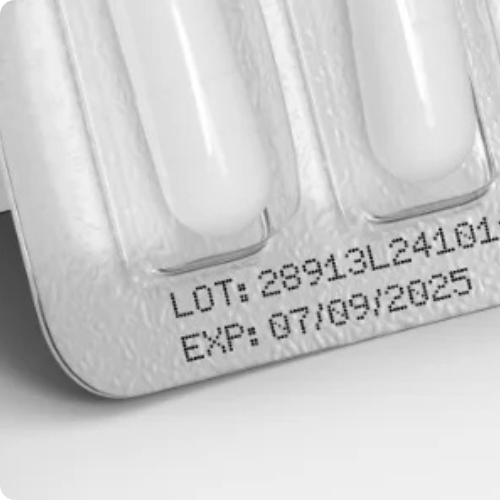
The core mandatory labelling information for cosmetics sold in the UK includes:
Batch numbers are particularly critical. They are the primary mechanism by which regulators, retailers, and brands can trace a product back to a specific production run in the event of a safety concern or recall. A batch code that is smudged, faded, or missing is not merely an aesthetic problem; it is a compliance failure.
In practice, the information that must be applied directly online during production typically includes the batch number, the date of minimum durability or manufacturing date, and in some cases, a site or line identifier. This is where your industrial coding and marking system earns its place on the production floor.
Why Cosmetic Packaging Makes Coding Harder Than You Think
If coding requirements were straightforward and packaging surfaces were consistent, almost any printer would do. The reality in personal care manufacturing is considerably more demanding.
Surface Complexity
Cosmetic packaging materials span a remarkably broad range. A single production facility might run aluminium tubes, HDPE bottles, LDPE sachets, glass jars, PET containers, and printed cartons, sometimes within the same shift. Each substrate behaves differently when ink is applied. Soft-touch coatings, which are increasingly popular for premium products, can be particularly problematic; adhesion is poor with standard inks, and surface contamination from handling makes consistent marking a real challenge.
Highly curved surfaces such as lipstick caps, mascara wands, and tapered fragrance bottles add another layer of difficulty. Codes must remain legible across the full curvature without distortion or ink spread.
Ingredient Contamination
Perhaps more than in any other manufacturing sector, cosmetic production environments expose printed codes to the very chemicals being processed. Alcohol-based formulations, carrier oils, solvents, emollients, and surfactants can all come into contact with printed surfaces during filling and packaging. If the ink used is not formulated to resist these substances, codes will smudge, fade, or dissolve, potentially before the product even reaches the consumer.
“A batch code that cannot survive contact with an alcohol-based fragrance mist is not a compliant batch code. It is a liability waiting to happen.”
Line Speed and Format Change Frequency
Cosmetics manufacturers typically operate at high line speeds and manage large, diverse SKU portfolios. Promotional cycles, seasonal launches, retailer exclusives, and private label work mean that format changes can be frequent, sometimes multiple times per shift. Any coding solution that requires lengthy manual reconfiguration between runs will become a production bottleneck and a source of inconsistency.
The Three Core Capabilities Your Coding System Must Deliver
1. Small, Precise Marking Without Sacrificing Aesthetics
In cosmetics, the packaging is part of the product. Brands invest significantly in typography, colour, and finish, and the last thing a brand manager wants is a clumsy or oversized batch code disrupting the visual integrity of premium packaging.
This is where Continuous Inkjet (CIJ) technology genuinely comes into its own. Hitachi’s UX2-Micro CIJ printers are engineered specifically to meet the dual demands of cosmetic coding: delivering high-resolution, small-format characters that are fully legible under regulatory scrutiny while remaining visually unobtrusive on branded packaging. Whether the requirement is a discreet two-line code on the base of a mascara tube or a precise date stamp on the shoulder of a glass serum bottle, the output quality is consistent and controlled.
The ability to print small without sacrificing clarity is not a luxury in this sector; it is a baseline requirement.
2. Solvent-Resistant Inks That Maintain Legibility Throughout the Product Lifecycle
Regulatory compliance does not end when the product leaves the factory. A batch code must remain legible throughout the product’s shelf life, which for some cosmetics means two, three, or even five years. This places considerable demands on ink chemistry.
Hitachi’s alcohol-resistant ink formulations are specifically developed to withstand the chemical environment of personal care products. These inks maintain adhesion and clarity across a wide range of packaging substrates, including polyethylene, polypropylene, glass, aluminium, and various coated carton materials. They resist smearing on contact with oils, surfactants, and alcohol-based products without requiring a curing stage, making them well-suited to high-speed production environments where drying time is limited.
The practical benefit is straightforward: codes applied at the point of manufacture remain readable at the point of use, meaning your traceability chain is intact from production to consumer.
3. Anti-Counterfeit Capability That Protects Brands and Consumers
Cosmetic counterfeiting is not a niche concern. The European Union Intellectual Property Office (EUIPO) has consistently identified beauty and personal care as among the most heavily counterfeited product categories globally. Counterfeit cosmetics frequently contain unregulated or hazardous ingredients, and the reputational damage to legitimate brands from association with fake products can be severe.
Advanced coding solutions address this risk through UV fluorescent ink technology. Under standard visible light conditions, these inks are invisible on packaging, preserving the brand’s aesthetic presentation. Under UV illumination, however, they reveal hidden codes, authentication marks, or batch identifiers that are immediately distinguishable from counterfeit products.
This approach allows manufacturers to embed a covert verification layer into the standard production process without adding complexity or cost to packaging design. For brands operating in premium or sensitive product categories, including skincare actives, professional hair colour, and prestige fragrances, this capability can be invaluable.
Matching the Right Printing Technology to Your Production Environment
Continuous Inkjet (CIJ): The Industry Standard for a Reason
Continuous inkjet printing remains the dominant technology for primary packaging coding in personal care manufacturing, and not without reason. CIJ printers are non-contact, which means they can mark across curved, irregular, and soft surfaces without physical pressure that could distort packaging. They operate at high speed without compromising print quality, and they can accommodate a wide range of ink formulations, including the solvent-resistant and UV fluorescent variants that cosmetics applications demand.
Modern CIJ systems, such as those in the Hitachi range distributed in the UK by Newcode, offer touchscreen-driven interfaces with pre-stored message templates, making format changes quick and operator-friendly. Integration with production line control systems and ERP platforms enables automatic date updates, batch number increments, and real-time print verification, all of which reduce the risk of human error in compliance-critical applications.
Laser Coding for Permanent, Chemical-Resistant Marking
Where absolute permanence is required, laser coding systems offer an alternative worth considering. Laser marking ablates or reacts with the packaging surface itself, creating a code that is entirely resistant to chemicals, abrasion, and moisture because it has no ink to smudge or dissolve. For certain packaging substrates, particularly dark glass bottles, metallic caps, and some rigid plastics, laser coding provides outstanding durability and a clean, premium aesthetic.
The trade-off is substrate specificity: not all packaging materials respond well to laser marking, and the capital investment is typically higher than CIJ. For production lines running a consistent substrate with demanding durability requirements, however, laser is a highly effective option.
Common Applications Across Personal Care Production
To understand where coding and marking solutions add genuine value in practice, it helps to consider the range of specific applications encountered in a typical personal care manufacturing environment.
Flexible tubes and sachets: Squeezable tubes for moisturiser, toothpaste, and hair conditioner require coding on soft, deformable substrates. Non-contact CIJ printing handles this without pressure marking or distortion.
Glass bottles and jars: Premium skincare and fragrance packaging often uses glass, which can be challenging for ink adhesion, particularly when surfaces are coated. Specialist glass-adhesion inks within a CIJ system resolve this effectively.
Cartons and secondary packaging: Outer cartons typically carry the consumer-facing information printed in the artwork, with batch codes and dates applied in-line. Fast, accurate CIJ or thermal inkjet coding ensures consistency at case-packing speeds.
Aerosol cans: Pressurised packaging for deodorants, dry shampoos, and mousses requires coding on curved, often lacquered metal surfaces. Solvent-based CIJ inks provide reliable adhesion in this context.
Compact cases and rigid cosmetic components: Small, precisely curved surfaces such as lipstick bullets, eyeshadow cases, and mascara components demand high-resolution, small-character printing with no tolerance for positional inaccuracy.
The Business Case for Investing in the Right Coding Solution
It is tempting to view marking and coding as a cost centre, a compliance necessity rather than a source of value. That view misses the broader picture.
Consistent, high-quality coding directly reduces product reject rates. When codes are clear, correctly positioned, and durable, fewer units are pulled from the line for rework or disposal. Over a production run of millions of units, the cumulative cost saving is material. Equally, reliable traceability infrastructure means that in the event of a quality issue, the scope of any recall can be precisely defined by batch, significantly limiting financial exposure.
For brands in premium and prestige categories, the visual quality of coding also affects consumer perception. A poorly applied or visually clashing date stamp on a luxury cream undermines the brand values communicated by every other element of the packaging. Conversely, a clean, discreet, well-placed code reinforces quality and attention to detail.
Conclusion: Compliance Starts with the Right Coding Partner
Cosmetics labelling requirements in the UK are clear in their intent: every product reaching the market must be traceable, dated, and identifiable. What is less obvious, until you are operating a fast-moving personal care production line, is how technically demanding it is to meet those requirements consistently across diverse packaging formats, challenging substrates, and chemical-rich environments.
The coding and marking system you choose is not simply a printer. It is a compliance tool, a brand protection mechanism, and a traceability asset. Choosing a solution designed specifically for the demands of personal care manufacturing, backed by proven ink chemistry, flexible software integration, and reliable UK-based support, is an investment that pays dividends across quality, compliance, and operational efficiency.
As the official UK distributor of Hitachi industrial coding technologies, Newcode works with personal care manufacturers to specify, install, and support coding systems matched to the specific demands of their production environments. Whether you are coding flexible sachets, glass bottles, or aerosol cans, the right solution exists. The question is finding a partner with the expertise to help you implement it correctly.
Here is a curated list of **references and further reading** for your blog post on “Cosmetics Labelling Requirements in the UK: What Your Printer Must Be Able to Do.” These sources directly support the key sections, including official UK regulations, labelling mandates (e.g., batch numbers, expiry/PAO, responsible person details), challenges in coding/marking for cosmetics, CIJ technology (especially Hitachi), solvent-resistant/UV inks, and counterfeiting risks.
References and Further Readings